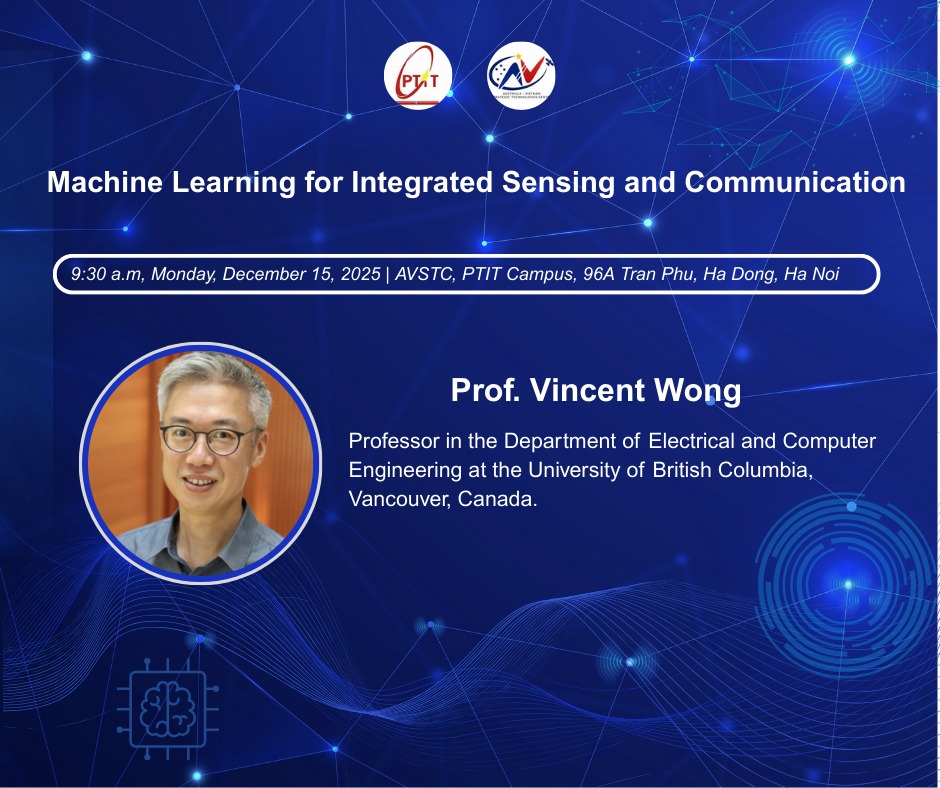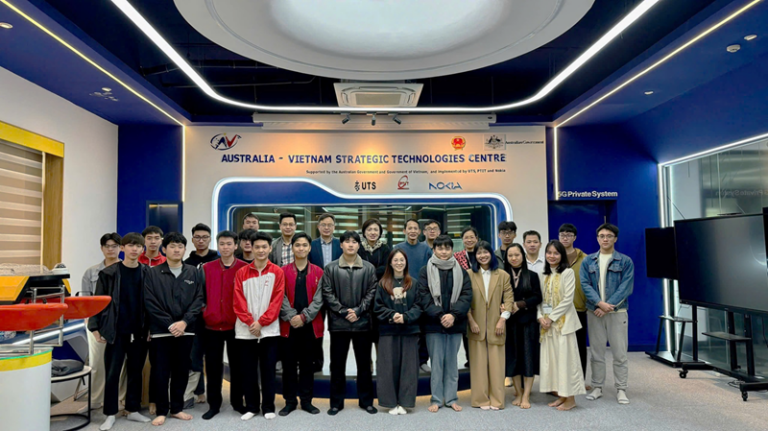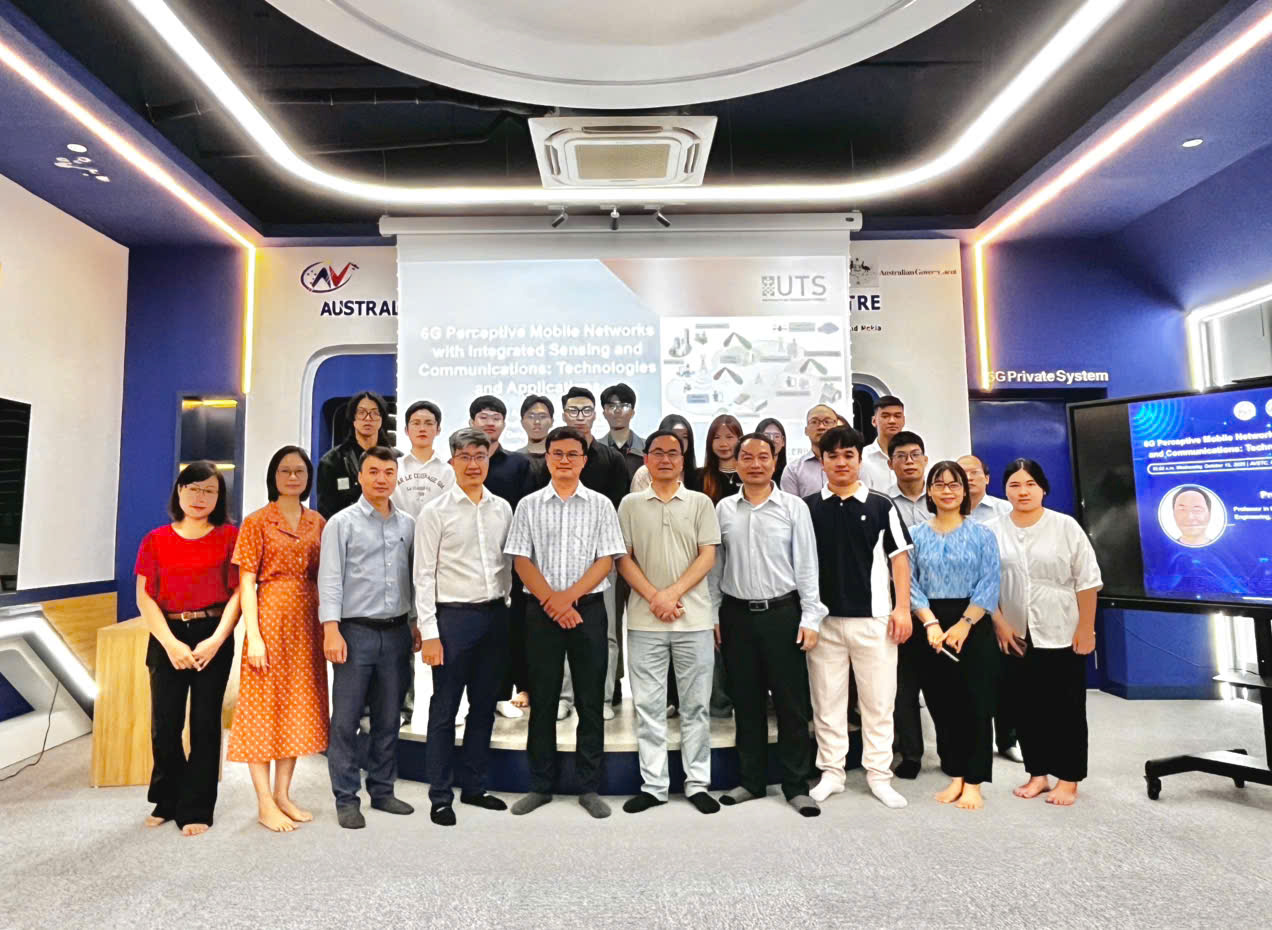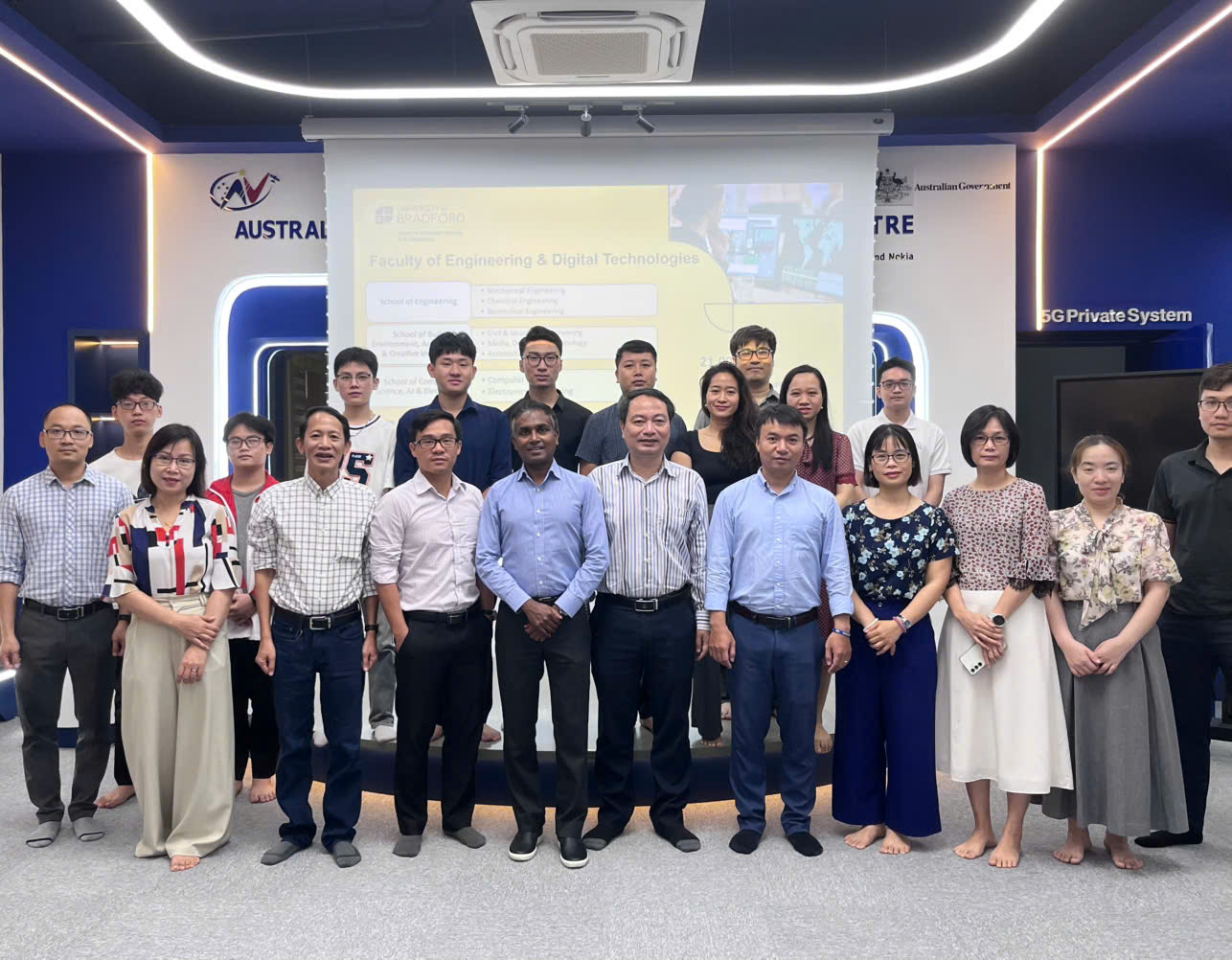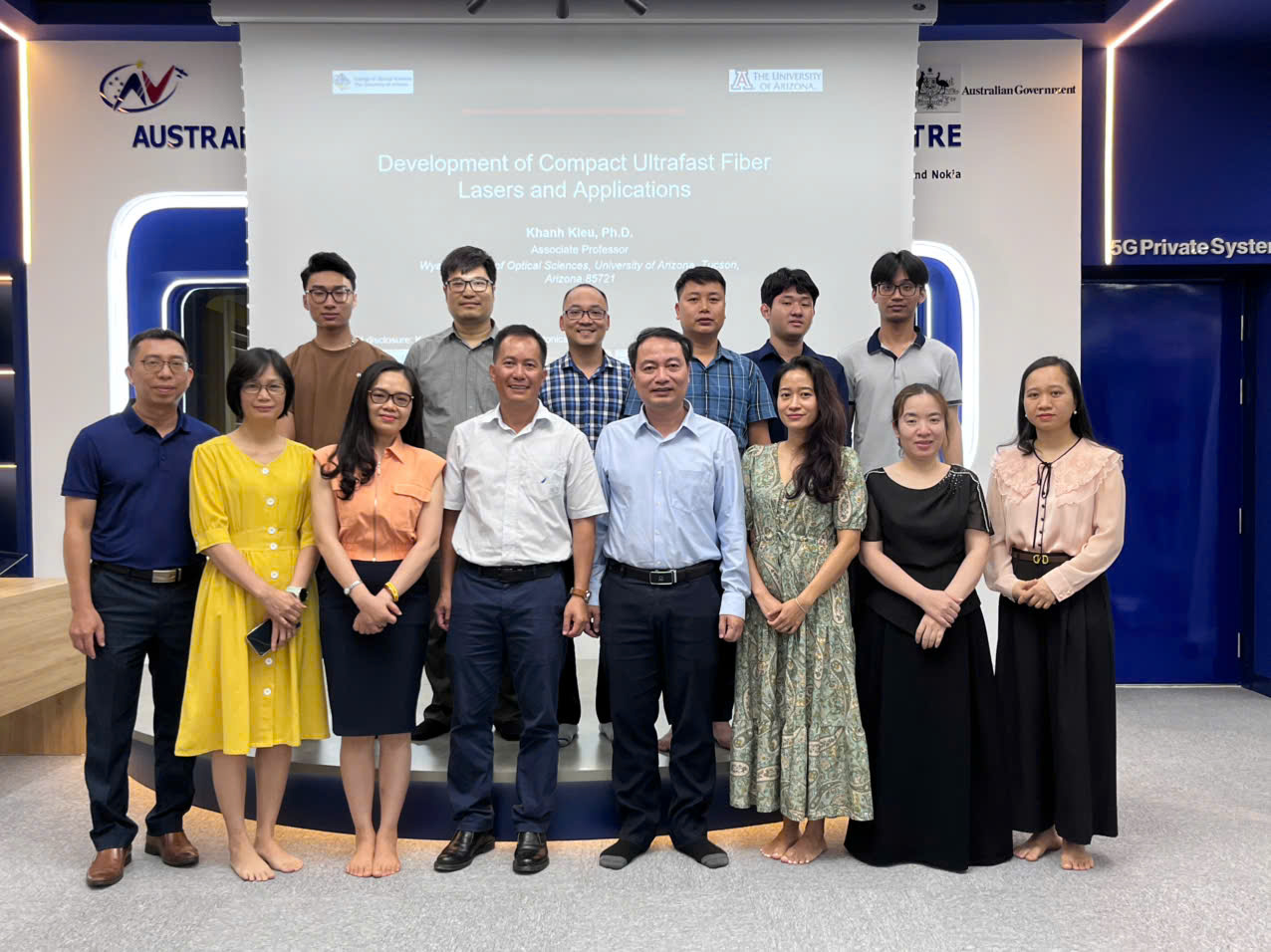
The seminar “Machine Learning for Integrated Sensing and Communication”, delivered by Professor Vincent Wong, was successfully held at the Australia–Vietnam Strategic Technology Center, Posts and Telecommunications Institute of Technology (PTIT) on 15 December 2025.
During the seminar, Prof. Vincent Wong presented state-of-the-art research directions in Integrated Sensing and Communication (ISAC), highlighting how data-driven machine learning techniques can overcome the limitations of conventional optimization-based approaches. His talk emphasized sensing-assisted predictive beamforming, where channel prediction and beamforming optimization are jointly enabled by sensor information to significantly enhance wireless communication efficiency.
In addition, Prof. Wong introduced machine learning–based cooperative sensing frameworks, enabling multiple devices to collaboratively collect and process environmental information in an efficient and intelligent manner. These studies not only demonstrate strong theoretical contributions but also show great potential for practical applications in next-generation wireless networks, IoT systems, and intelligent communication infrastructures.
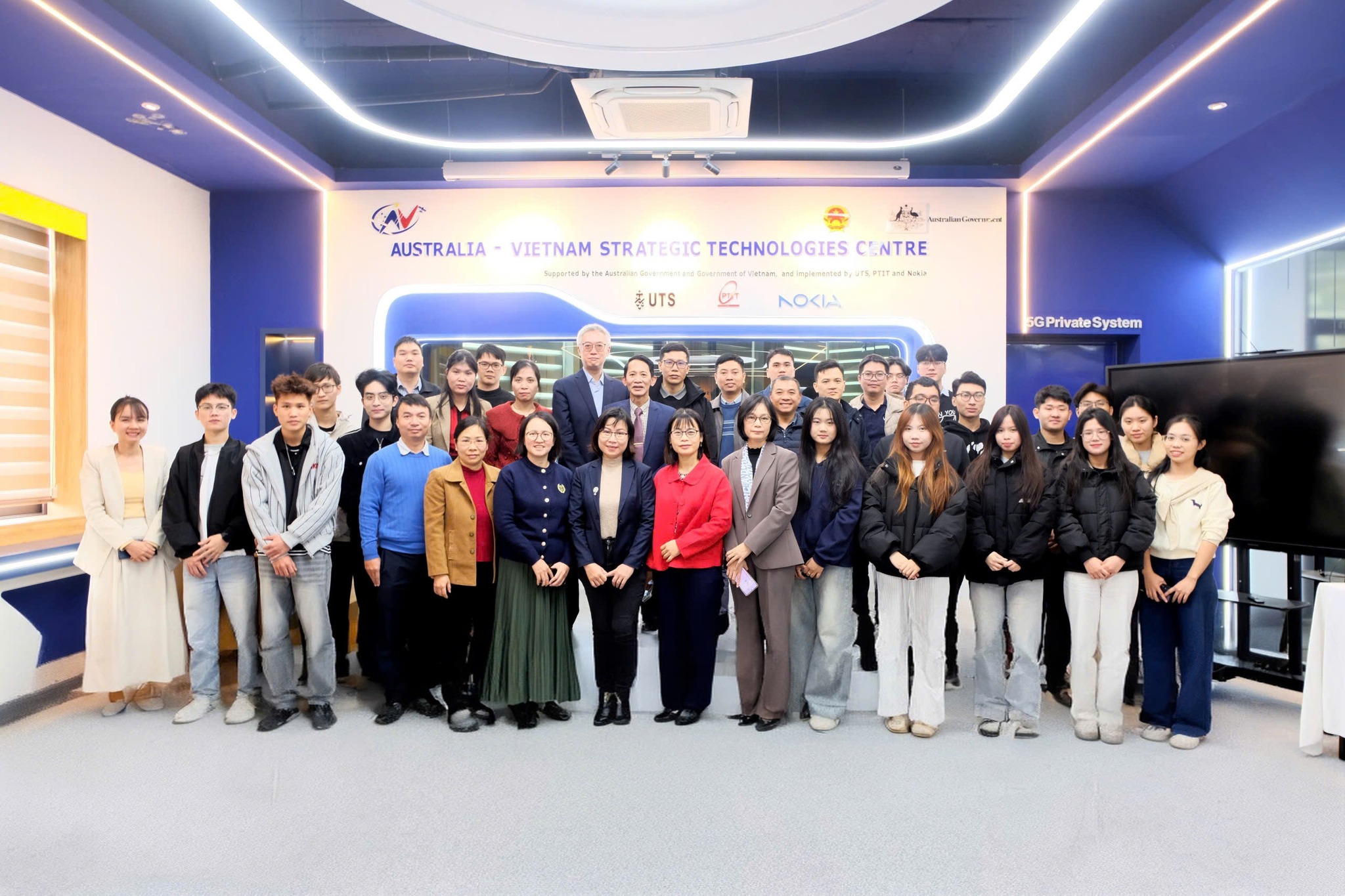
The discussion and Q&A session took place in an open, engaging, and academically stimulating atmosphere, reflecting the strong interest of the Vietnamese research community in the integration of machine learning, sensing, and wireless communications. Prof. Wong also engaged in in-depth technical exchanges with Vietnamese researchers, paving the way for future joint studies.
The organizing committee would like to sincerely thank Professor Vincent Wong for delivering an insightful and high-impact presentation. We also extend our heartfelt appreciation to all distinguished guests, researchers, lecturers, and students for their active participation and valuable contributions. The success of this seminar once again highlights the importance of international academic exchanges in fostering knowledge sharing, research collaboration, and inspiration for the next generation of scientists.